SCIGAMA (Spinal Cord Injury Gut microbiome And Multi-organ gene expression Atlas)
A Comprehensive Resource for Understanding Multi-Organ Responses to Spinal Cord Injury
2077
Samples57
Datasets17
Organs15
Time pointsWelcome to SCIGAMA (Spinal Cord Injury Gut microbiome And Multi-organ gene expression Atlas) !
-
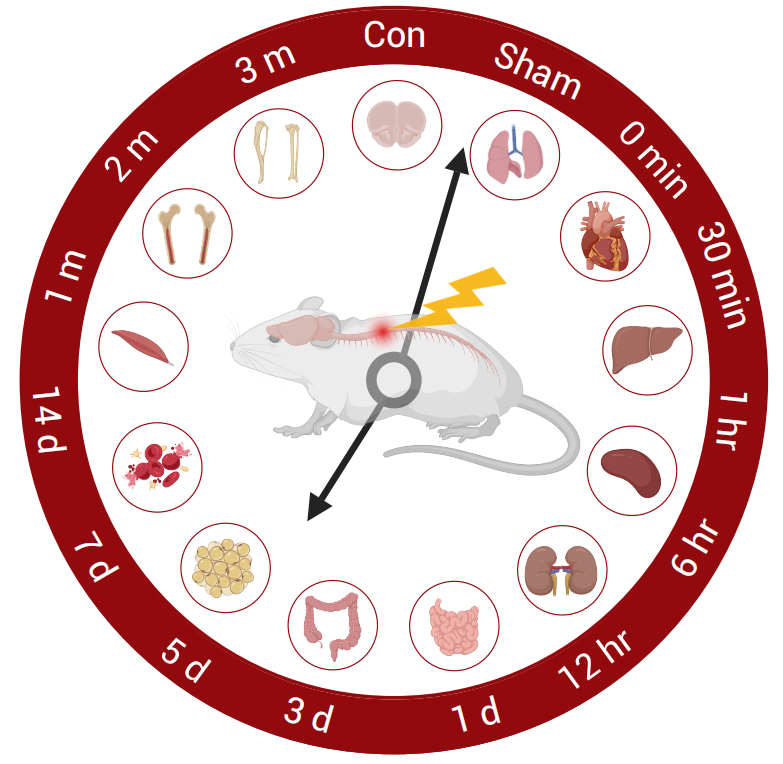
Spinal cord injury (SCI) is a devastating traumatic condition of the central nervous system that results in permanent neurological deficits and disrupts the function of multiple organ systems. SCIMAGA is a comprehensive, multidimensional database developed to support research on SCI. It includes gut microbiome data across 15 time points from three gut segments following SCI, as well as publicly available Microarray and RNA-seq datasets for four SCI-related tissues. Additionally, SCIMAGA also includes proprietary RNA-seq expression profiles from 14 different organs at the same SCI time points as the microbiome.
-
To our knowledge, SCIMAGA is the first comprehensive database to focus comprehensively on SCI and its gut microbial changes and multi-organ responses.. It offers detailed insights into the temporal changes in the gut microbiota across different anatomical regions of the organism following SCI. The database not only enables researchers to query existing expression profiles related to SCI but also facilitates the exploration of molecular dynamics across multiple organs after injury. Crucially, SCIMAGA also provides analytical tools to aid in the preliminary validation of research hypotheses.
-
The primary objective of SCIMAGA is to collect, organize, and analyze SCI-related microbiome and high-throughput sequencing data, thereby creating a rich resource for understanding the complex interactions between SCI, the gut microbiome, and multiple organs. By elucidating the molecular alterations that occur after spinal cord injury, SCIMAGA offers an invaluable resource for studying multi-organ responses and dynamic interactions post-SCI. Ultimately, SCIMAGA aims to enhance researchers' capacity to dissect the intricate pathophysiological mechanisms of SCI and its systemic effects, ultimately identifying potential therapeutic targets for promoting SCI repair.
Gut Microbiome: 270 Samples
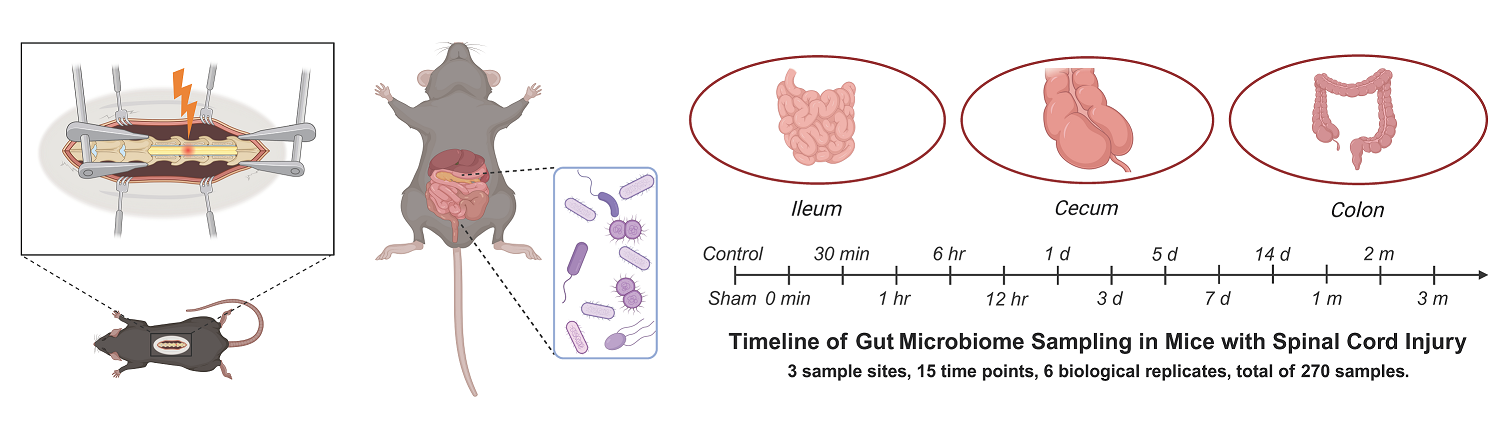
Public Datasets: 967 Samples

Multi-Organ Transcriptome (Mouse) : 840 Samples
News and Update
- 2025-07-15: Updated font effects for the SCIGAMA;
- 2025-07-04: Fixed a bug in the Transcripome-Analysis-Expression-Search by TF function where only one result was displayed;
- 2025-06-26: Homepage optimization; added interactive click functionality to Gut Microbiome Figure;
- 2025-06-23: Optimized SCIGAMA tutorial for enhanced user accessibility and interactivity
- 2025-05-18: Optimize visualization functions
- 2025-04-07: Optimize the layout of the home page
- 2025-04-03: Added bulk analysis results download feature
- 2025-03-11: UI/UX overhaul with responsive layout optimization
- 2025-02-26: Launched microbiome analysis pipeline
- 2025-01-20: Updated transcriptome datasets
- 2025-01-12: Expanded database with 3 gut sites × 15 timepoints microbial data
- 2024-12-29: Public data updates
- 2024-11-07: Completed pre-processing pipeline for longitudinal microbiome datasets
- 2024-10-15: Deployed transcriptomics module
- 2024-9-14: Added differential expression tools
- 2024-08-20: Incorporated multi-organ (14 organs) RNA-seq data across 15 SCI time points
- 2024-06-20: Uploaded spinal cord injury data related to Mus musculus and Rattus norvegicus
- 2024-06-10: Integrated murine SCI RNA-seq data (Mus musculus/Rattus norvegicus)
- 2024-05-20: Curated microarray datasets for murine SCI models